
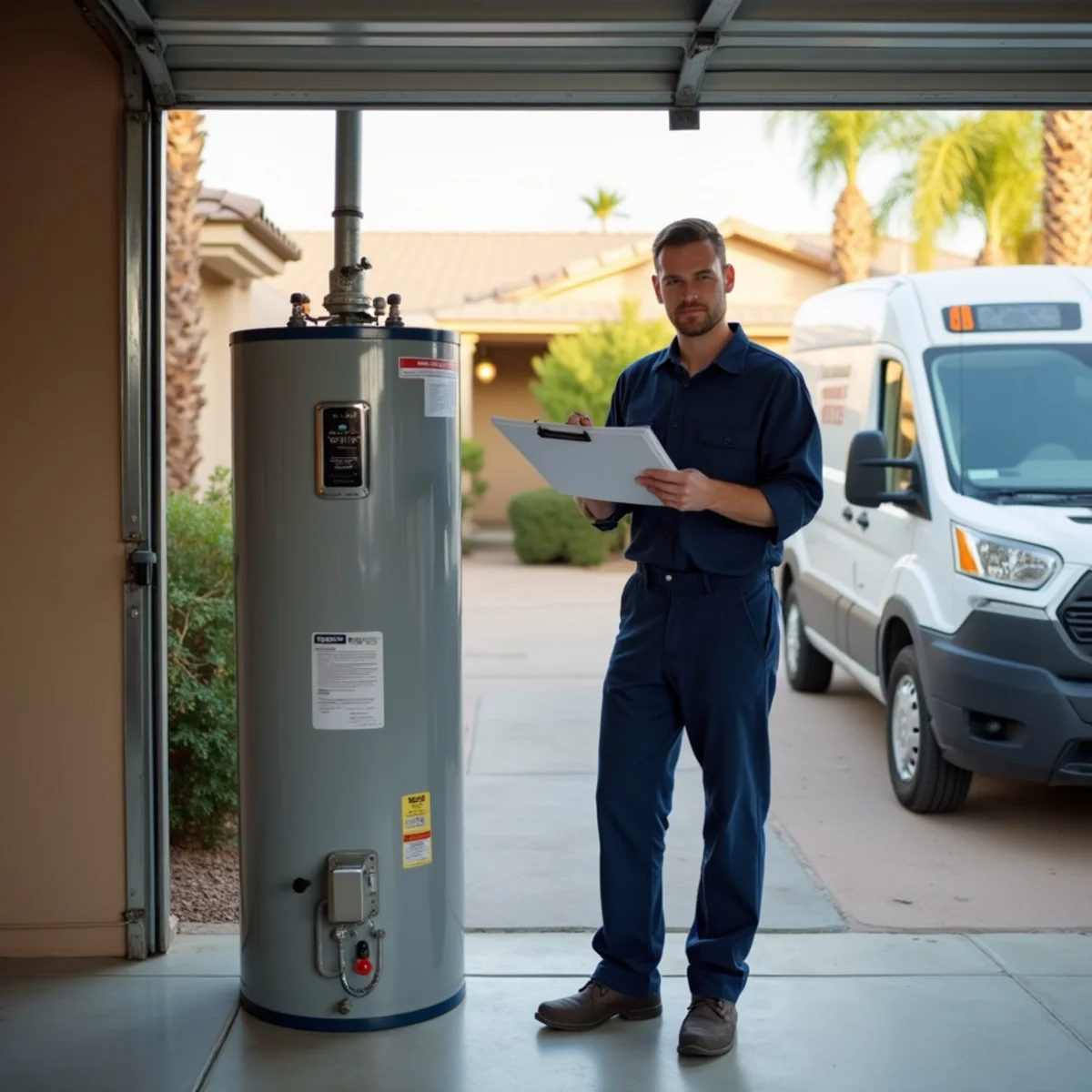
When a water heater fails, the first question most Buckeye homeowners ask is what a replacement will cost. It is a fair question, and it deserves a straight answer, but the honest version is a range rather than a single number, because the total depends on the type of unit, the condition of your existing setup, and local requirements like permits.
Below are realistic benchmarks for the Phoenix and Maricopa County market, along with the specific factors that push a quote up or down. These figures are meant to help you plan and compare, not to serve as a guaranteed price for your address.
Benchmark Ranges for the Phoenix and Maricopa Market
A standard tank water heater replacement in this region commonly falls between $800 and $2,000, installed. That spread covers the difference between a basic 40-gallon electric swap and a larger gas unit with more involved connections. A tankless installation typically runs from $1,500 to $3,500 because it often requires new venting, gas, or electrical work.
If the existing unit is repairable rather than failed, water heater repair usually ranges from about $150 to $700. When you are weighing a repair against a full replacement, those numbers are the starting point for the conversation.
- Tank replacement: about $800 to $2,000
- Tankless installation: about $1,500 to $3,500
- Water heater repair: about $150 to $700
- Typical service call to diagnose: about $75 to $150
What Actually Changes Your Quote
Two homes on the same Buckeye street can get different quotes for what looks like the same job. The size and fuel type of the unit matter first, since a larger tank or a switch from electric to gas adds material and labor. The condition of your existing connections matters next; corroded fittings, an old shutoff valve, or a water heater tucked into a tight closet all add time.
Code upgrades are a common surprise. An older installation may need a new expansion tank, an updated drain pan, a seismic or safety strap, or venting changes to meet current code. These are not upsells; they are what brings the installation into compliance and keeps the warranty valid.
Permits and Inspection in Buckeye
Buckeye lists water heaters among its same-day residential permits, and applications submitted after January 1, 2025 must comply with the city 2024 Construction Codes. A permit and inspection add a modest cost and a little time, but they protect you: the work is verified against code, and the paperwork matters if you sell the home or file an insurance claim later.
Ask any contractor who pulls the permit and schedules the inspection. A licensed plumber should handle this as part of the job and confirm the current requirement before work begins. Madrid Plumbing serves Buckeye and the wider Maricopa County area and can walk you through the permit step.
Why Hard Water Raises the Long-Term Cost
The purchase price is only part of the story. Local groundwater in Buckeye and nearby Surprise is hard, often 15 to 20 grains per gallon, and that mineral load builds sediment inside a tank. Sediment forces the unit to run hotter and longer, shortening its life and raising energy bills.
That is why a replacement conversation often includes water treatment. A softener protects the new heater and every fixture in the house, and annual flushing keeps sediment from cutting years off the tank. Factoring in treatment can make the difference between replacing a heater every several years and getting its full expected life.
Getting a Quote You Can Trust
A trustworthy quote is itemized. It should show the unit, the labor, any code upgrades, the permit, disposal of the old heater, and the warranty terms, so a low number that leaves out the permit or a needed expansion tank does not look better than a complete one. Madrid Plumbing offers free estimates, so you can compare in writing before deciding.
If your household has grown or you are tired of running out of hot water, ask about sizing up or moving to tankless while the heater is already being replaced. It is far cheaper to make that change during a planned replacement than as a separate project later.
Signs It Is Time to Replace, Not Repair
Sometimes the smarter money is a replacement even when a repair is technically possible. A few signs point clearly toward replacing: any water pooling at the base of the tank, rusty hot water, a unit near or past its expected lifespan, or a heater that has needed multiple repairs in a short span. A leaking tank in particular cannot be repaired and can fail suddenly, so it should be replaced promptly.
Age matters because hard water shortens water heater life in the West Valley, so a Buckeye tank often reaches the end of its useful life sooner than a national average would suggest. If your unit is aging and losing capacity, planning a replacement on your own timeline is far less stressful, and usually less costly, than reacting to a flooded garage after the tank gives out.
How Madrid Plumbing Can Help
Frequently Asked Questions
As a Phoenix-area benchmark, a tank replacement commonly runs about $800 to $2,000 installed, and a tankless installation about $1,500 to $3,500. Your final quote depends on unit size, fuel type, code upgrades, and the permit. Ask for an itemized estimate.
Yes. Buckeye lists water heaters among same-day residential permits, and work must meet the current construction codes. A licensed plumber should pull the permit and schedule the inspection as part of the job.
It depends on the age, the failed part, and the tank condition. A minor repair on a newer, well-maintained unit is often worthwhile, but a leaking or aging tank that keeps failing is usually better replaced. Ask for both options in writing.