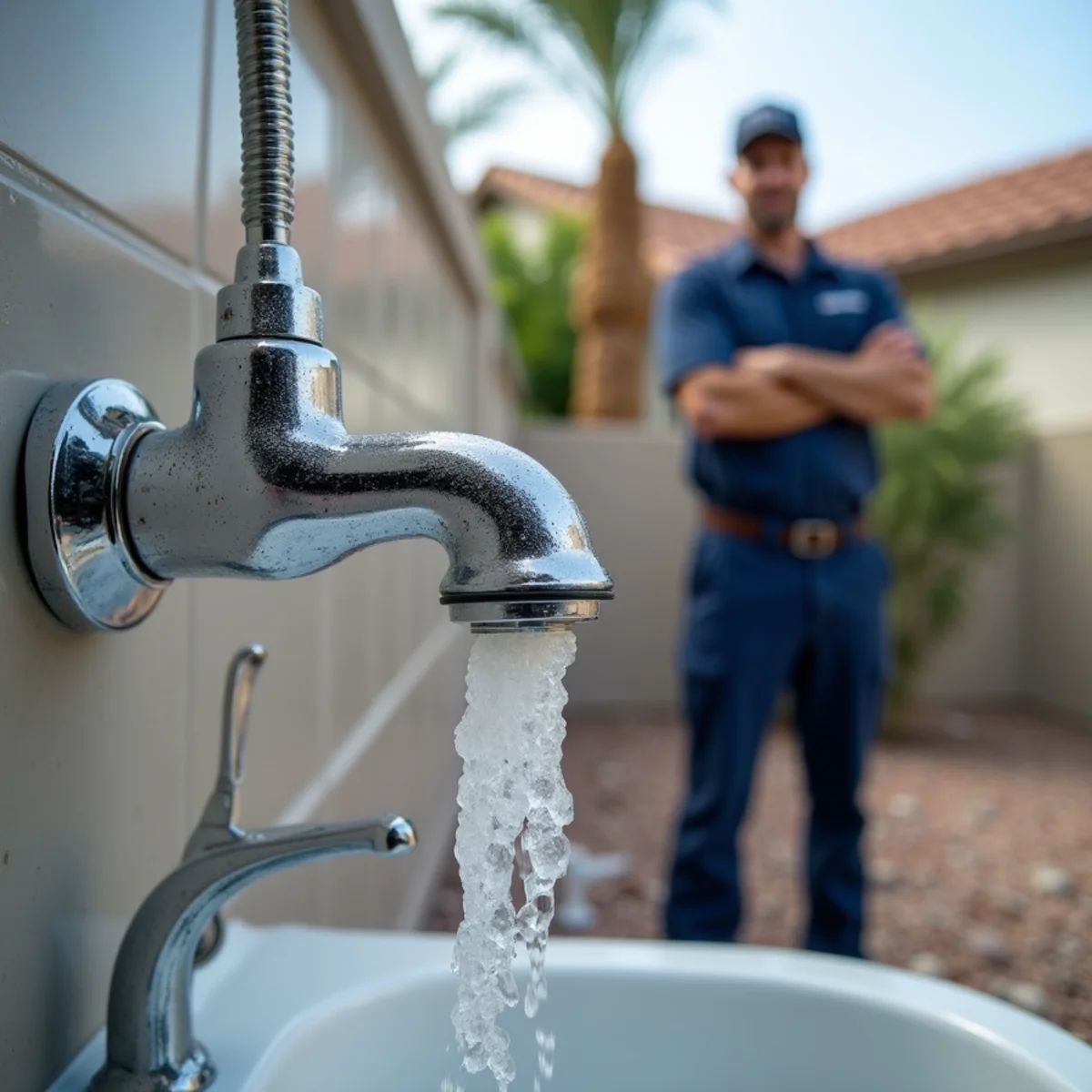
If you live in the West Valley, you have seen hard water even if you have never measured it: the chalky white crust on faucets, the spots on glasses, the film in the shower. That mineral content is not just a cosmetic annoyance. Over time it damages pipes, fixtures, and appliances, and it quietly raises your cost of living across Maricopa County.
Understanding how hard water works, and what it costs you, is the first step to protecting the plumbing you have already paid for. Here is what is really happening inside your pipes and what you can do about it.
What Makes Arizona Water So Hard
Buckeye and the surrounding area rely almost entirely on groundwater, which picks up dissolved calcium, magnesium, and sodium as it moves through desert rock and soil. Those minerals are what make water hard, and local hardness commonly measures around 15 to 20 grains per gallon, well into the range considered very hard.
For comparison, water is generally called hard above about 7 grains per gallon. At two to three times that level, the mineral load in a typical West Valley home is high enough to leave visible scale within weeks and to affect the inside of your plumbing continuously.
How Scale Damages Your Plumbing
As hard water flows and heats, minerals precipitate out and cling to surfaces as scale. Inside pipes, that buildup narrows the passage, reducing flow and pressure and giving corrosion a foothold. At fixtures, it clogs aerators and showerheads and seizes valves. In appliances, it coats heating elements and shortens the life of dishwashers and washing machines.
Your water heater takes the worst of it. Scale settles as sediment at the bottom of the tank, insulating the burner from the water so the unit runs longer, wastes energy, and wears out sooner. This is a major reason Arizona water heaters often need replacement earlier than they would in a soft-water region.
- Narrowed pipes with reduced flow and pressure
- Clogged aerators, showerheads, and seized valves
- Sediment in the water heater cutting efficiency and lifespan
- Shorter life for dishwashers and washing machines
- Spotting on glassware and film on skin and hair
The Real Cost of Doing Nothing
Hard water rarely causes a single dramatic failure; it works by attrition. A water heater that should last many years fails early. Faucets and valves wear out and need replacement. Energy bills creep up as scaled appliances work harder. Individually these are small; together, over a decade, they add up to real money spent replacing equipment that scale wore out.
For a homeowner in Gilbert or anywhere in the Valley, the question is not whether hard water is costing you, but how much, and whether treating it costs less than the damage it causes. For most households, the math favors treatment.
The Solutions That Actually Work
A whole-home water softener is the primary defense. It removes the calcium and magnesium before the water reaches your pipes, protecting every fixture and appliance in the house at once. Paired with periodic water heater flushing, it dramatically slows scale and extends the life of your equipment. Madrid Plumbing provides water softener installation across the West Valley and Maricopa County.
For drinking water specifically, a reverse osmosis system at the kitchen sink addresses taste and dissolved solids at the point of use. A softener and a point-of-use filter solve different problems, so a proper assessment starts with measuring your actual hardness rather than guessing.
Start With a Measurement
Before buying any equipment, get your water tested so treatment is matched to your real numbers. Sizing a softener correctly depends on your hardness level and household water use, and the installation location, drain requirements, and maintenance needs all factor into the right system for your home.
If you are already seeing scale on fixtures, a shorter run of hot water, or fixtures wearing out faster than they should, those are signs the mineral load is high enough to act on. A measured assessment turns those symptoms into a clear plan.
Everyday Effects Beyond the Pipes
Hard water shows up in daily life long before it causes a plumbing failure. Soap and detergent do not lather well in hard water, so you use more of everything, from dish soap to shampoo to laundry detergent, and still see spots on glasses and film on shower doors. Laundry comes out stiffer and colors fade faster as minerals work into fabric.
It affects you personally too. Many people notice dry skin and dull, tangled hair after showering in very hard water, because the minerals interfere with how soap rinses away. None of these is dangerous, but together they explain why homes that add a softener often notice the difference immediately, well beyond the protection it gives the plumbing. When you weigh the cost of treatment, these everyday quality-of-life gains are a real part of the value.
How Madrid Plumbing Can Help
Frequently Asked Questions
Local groundwater is very hard, commonly around 15 to 20 grains per gallon. Water is generally considered hard above about 7 grains per gallon, so West Valley water is roughly two to three times that level, which is why scale forms so quickly.
Yes. A whole-home softener removes the calcium and magnesium that form scale, protecting pipes, fixtures, and appliances throughout the house. Combined with annual water heater flushing, it slows scale and extends the life of your equipment.
They solve different problems. A softener treats hardness for the whole house, while a reverse osmosis system improves drinking water taste and quality at one tap. Many homes benefit from both, but a water test should guide the decision.