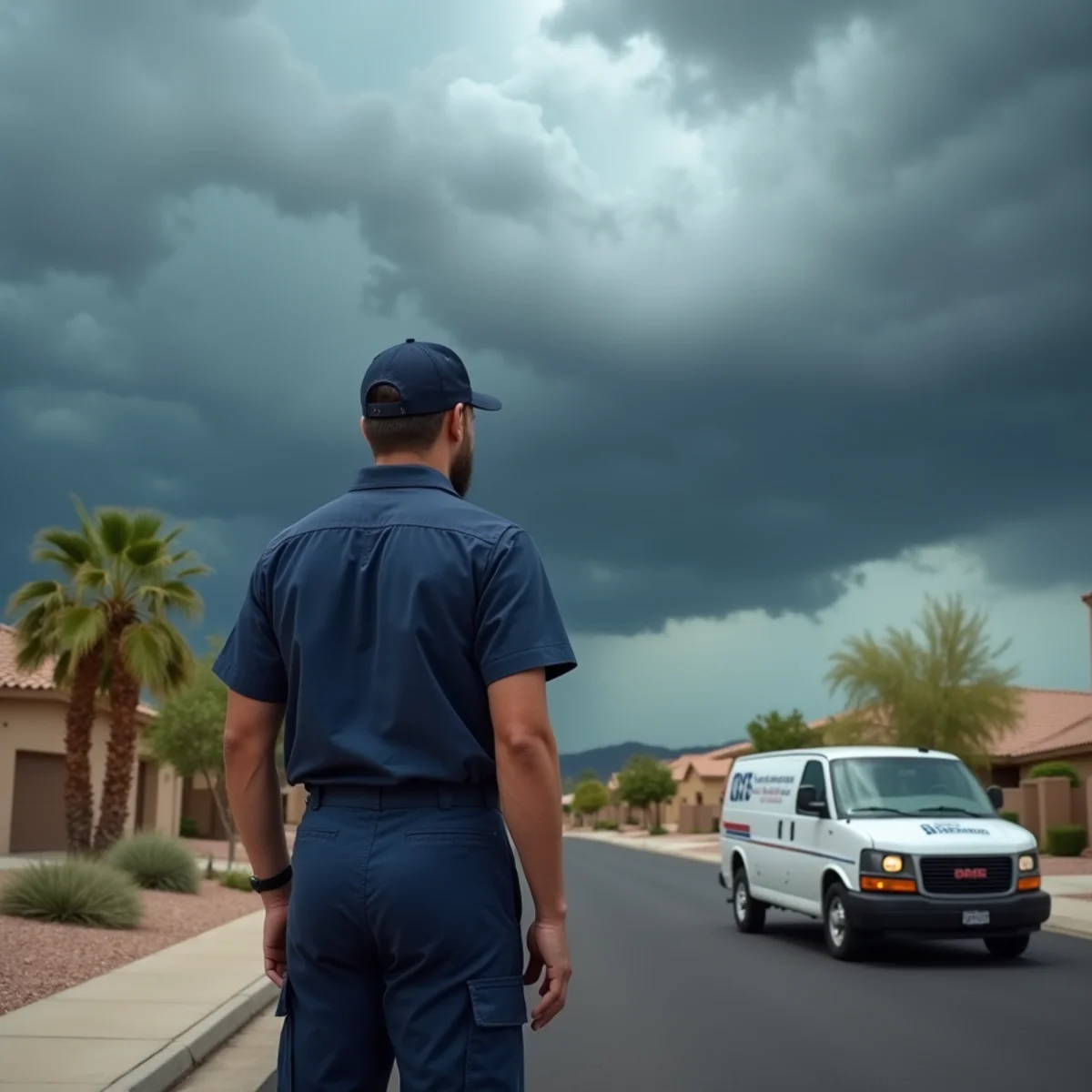
Arizona monsoon season, running roughly from June into September, delivers a lot of water in a very short time. Ground baked hard by months of drought cannot absorb a sudden downpour, so the water runs off fast, overwhelms drainage, and finds every weakness in a home plumbing and drainage system.
For homeowners in Laveen and the low-lying parts of the Valley, monsoon storms are when hidden sewer and drainage problems reveal themselves, often at the worst possible moment. A little preparation before the storms arrive is far cheaper than an emergency during one.
Why Monsoons Cause Plumbing Problems
The core issue is volume and speed. Desert soil sheds a sudden heavy rain rather than soaking it up, sending large amounts of water toward storm drains, yards, and any low point around your home. When that volume exceeds what the drainage can handle, water backs up or pools where it should not.
That runoff also pushes debris, dirt, and organic matter into drain and sewer lines. A line that was marginal in dry weather, already narrowed by roots or scale, can back up when the extra load hits it, which is why so many backups happen during storms.
Sewer Backups During Storms
The most serious monsoon plumbing problem is a sewer backup. Heavy rain can infiltrate and overload sewer lines, and if your line already has roots, a crack, or an offset joint, the added water can force wastewater back up into the lowest drains in your home.
Warning signs to watch for include multiple drains slowing at once, gurgling toilets, and water backing up at the lowest fixture when it rains. If you see these during a storm, stop using water and call for help. Madrid Plumbing offers 24/7 emergency service across Laveen and the West Valley, and a camera inspection can pinpoint whether a compromised sewer line needs repair.
- Multiple drains slowing at the same time
- Gurgling toilets when it rains
- Water backing up at the lowest drain in the home
- A sewage smell during or after a storm
Prepare Before the Storms Arrive
The best time to deal with monsoon plumbing is before the first storm. Have your drains and, if you have had backups before, your sewer line inspected in late spring so any weakness is found and cleared while the weather is dry. A camera inspection reveals roots, cracks, and buildup that a storm would otherwise expose the hard way.
Around the house, keep gutters and yard drains clear so water flows away from the foundation, and make sure the grading directs runoff away from the home. These simple steps reduce how much water reaches vulnerable points in the first place.
During and After a Storm
If a backup starts during a storm, treat it like any sewage emergency: stop using water, keep people and pets away from any wastewater, and avoid contact with contaminated water near electrical hazards. Do not reach for chemical drain cleaners, which will not clear a storm-driven main-line backup and can create hazards.
After the storm passes, watch for lingering signs of a problem, such as slow drains or a recurring smell, which suggest the line was compromised and needs attention. Addressing it before the next storm prevents a repeat.
When It Keeps Happening
A backup that returns every monsoon season is telling you the underlying line has a real problem, not just a temporary overload. Roots, a broken section, or an offset joint will keep letting storm water in until the line is repaired. Clearing it each year treats the symptom while the cause remains.
A sewer camera inspection identifies exactly what is wrong, and sewer line repair, whether a spot repair or a larger fix, resolves it for good. Breaking that annual cycle is almost always cheaper than another emergency call during the next big storm.
Protecting the Inside of Your Home
While a compromised sewer line is the most serious monsoon risk, there are steps that protect your home even when the line itself is sound. If your home has a basement, a crawl space, or a low-lying laundry or utility area, know where water tends to collect and keep valuables and electronics off the floor during storm season.
For homes that have experienced backups before, a backwater valve is worth discussing with a plumber; it is a device installed on the sewer line that helps prevent wastewater from flowing back into the home during an overload. Combined with a pre-season inspection and good exterior drainage, it adds a layer of protection for the most vulnerable properties. The goal is layered defense: keep storm water away from the home, keep the sewer line healthy, and have a plan if water does get in. With those layers in place, even a severe monsoon storm is far less likely to turn into an expensive interior cleanup, and a quick pre-season check with a plumber confirms your defenses are ready before the first big storm rolls through.
How Madrid Plumbing Can Help
Frequently Asked Questions
Heavy monsoon rain overloads drainage and can infiltrate sewer lines. A line already weakened by roots, cracks, or offsets cannot handle the extra water, forcing wastewater back into the home. Storms expose weaknesses that stay hidden in dry weather.
Have drains and, if you have had backups, your sewer line inspected before the season. Keep gutters and yard drains clear, ensure grading directs water away from the home, and address any known line problems while the weather is dry.
Stop using all water, keep people and pets away from any wastewater, and avoid contaminated water near electrical hazards. Do not use chemical drain cleaners. Call a 24/7 emergency plumber to clear the blockage and inspect the line.